Why the Best Option Isn’t Local
You searched for “Shadow Work Therapy Near Me” because something keeps happening, almost beyond your control.
The flare-up. The snap. The text you sent before your brain caught up to your fingers.
You know the pattern exists. Partner says one thing, you hear betrayal. Coworker asks a simple question, your body reads it as an attack. Someone leaves dishes in the sink, and your nervous system treats it like a threat to survival.
The reaction strikes before you even realize what’s happening.
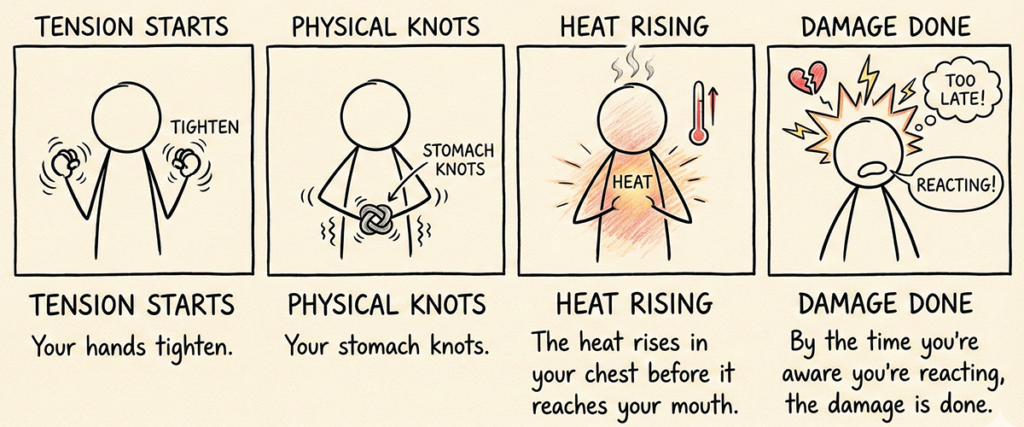
Your hands tighten. Your stomach knots. The heat rises in your chest before it reaches your mouth. By the time you’re aware you’re reacting, the damage is done.
You’ve tried managing it. Deep breaths. Counting to ten. Mindfulness apps. Journaling prompts from Pinterest.
None of it touches the root.
Because here’s what most people don’t understand about shadow work:
It’s not happening near you. It’s happening inside you.
And the best tools for that work aren’t necessarily sitting in an office building within driving distance.
The Search That Led You Here
You typed “shadow work therapy near me” because you assumed proximity mattered.
It doesn’t.
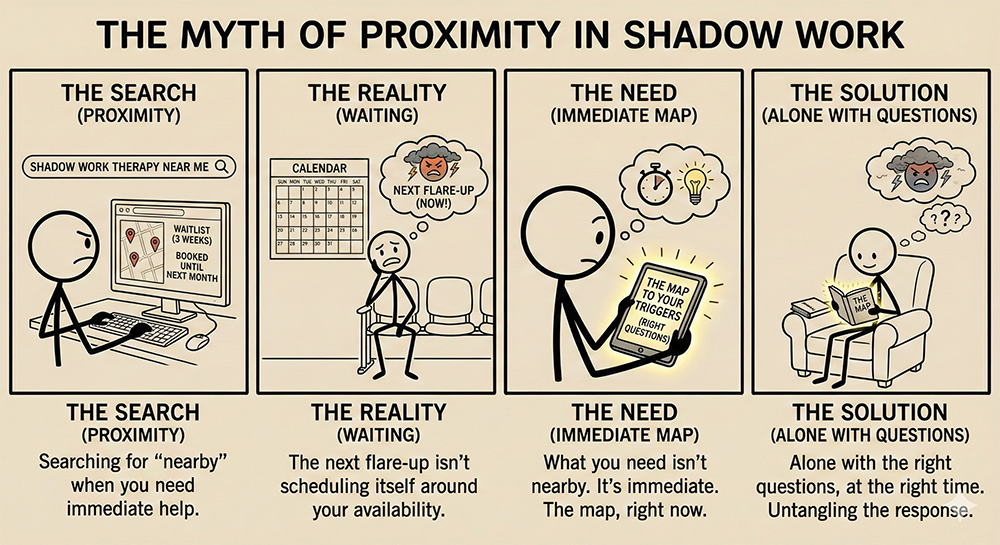
The work that needs to happen, the actual untangling of your nervous system’s automatic responses doesn’t require you to be in the same room as anyone. It requires you to be alone with the right questions, at the right time, in the right sequence.
What you actually need isn’t nearby. It’s immediate.
Not an appointment three weeks out. Not a waitlist. You need the map to your triggers. Right now. Tonight. This weekend.
Because the next flare-up isn’t scheduling itself around your availability.
What Shadow Work Actually Requires
Shadow work isn’t talk. It’s excavation.
It’s sitting with questions designed to surface the exact moment your wiring short-circuits.
Here’s what the work demands:
1. Focused Observation (60 Minutes)
Just observation:
- When do you react before you think?
- What’s the pattern?
- Where in your body does it start?
This is the Lightning Detector phase. You’re mapping hot zones. Finding where the heat begins before it reaches your mouth.
Most people skip this step entirely. They jump straight to “fixing” reactions they haven’t even clearly identified.
2. Structured Questioning (Gender-Adapted)
Men’s nervous systems process threats differently than women’s. Different childhood conditioning. Different social scripting. Different survival strategies.
Generic prompts miss the wiring.
The questions that crack someone open aren’t universal. They’re specific to how your particular nervous system learned to protect you.
3. Solo Reflection (No Audience)
Here’s the uncomfortable truth: Shadow work requires admitting things you won’t say out loud.
The reactions you’re hiding from yourself need privacy to surface. They need you alone, with questions that won’t let you perform or curate.
Your nervous system knows when there’s an audience. It stays guarded.
4. Immediate Application
The moment you identify a trigger, you need to trace it. The moment you understand the pattern, you need to widen the gap between stimulus and response.
Waiting a week between sessions kills momentum. Your nervous system resets. You lose the thread.
The Dirty Sink Isn’t About the Dishes
Let me show you what precision shadow work looks like.
You walk into the kitchen. Sink full of dishes. Your partner’s dishes.
Your body’s response: Instant rage. Disproportionate fury.
Your brain’s narrative: “They’re lazy. They don’t respect shared space.”
Your reaction: Passive-aggressive text. Or full confrontation. Or seething silence that ruins the evening.
What Precision Shadow Work Finds
Question 1: When you see the dirty dishes, where in your body does the reaction start?
Your answer: Chest. Tight. Hot.
Question 2: What does that tightness mean?
Your honest answer: I’m not seen. I’m not valued.
Question 3: When was the first time you felt invisible when trying to help?
Your answer: (Age seven. Cleaning the living room to make mom happy. She didn’t notice. She yelled about something else instead.)
Question 4: What did you decide in that moment?
Your answer: My effort doesn’t matter. People take advantage. I have to fight to be seen.
There it is.
The dirty dishes aren’t about the dishes. They’re about a seven-year-old who learned effort = invisibility, and developed a hair-trigger to prevent that feeling from ever happening again.
Your nervous system sees the sink and reads: You’re about to be invisible again. Defend yourself. NOW.
This entire excavation: 15 minutes with the right questions.
The Four-Stage Path
Shadow work unfolds in stages. Each builds on the last.
Stage 1: Awareness (The Lightning Detector)
60 minutes. Focused observation.
You’re not fixing anything yet. You’re mapping.
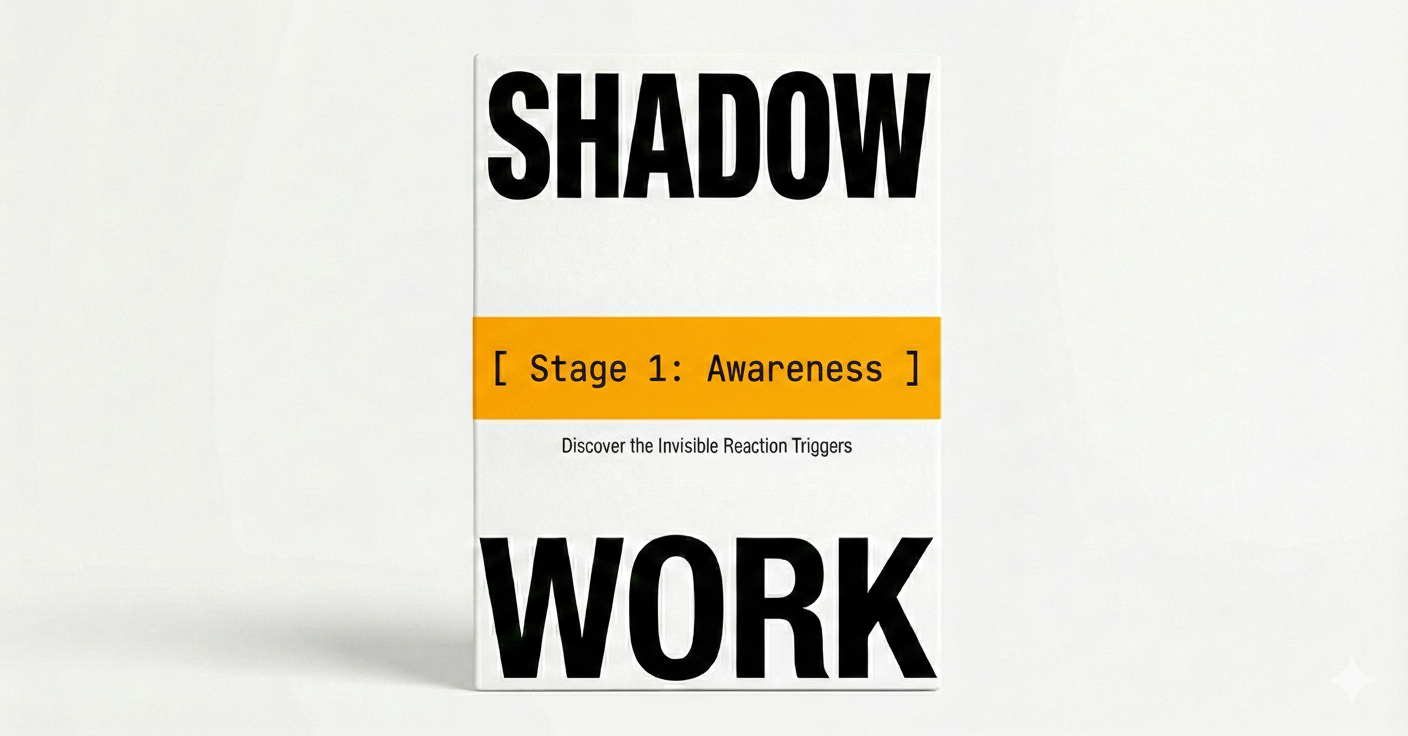
Output: Clear visibility. The blueprint to your nervous system’s automatic responses.
Most people stop here because awareness solves more than most advice ever will.
Stage 2: Identification (The Mute Button)
Now that the reaction is visible, you understand why it exists.
- What’s the “Old Story” driving this reaction?
- Why do certain people bypass logic entirely?
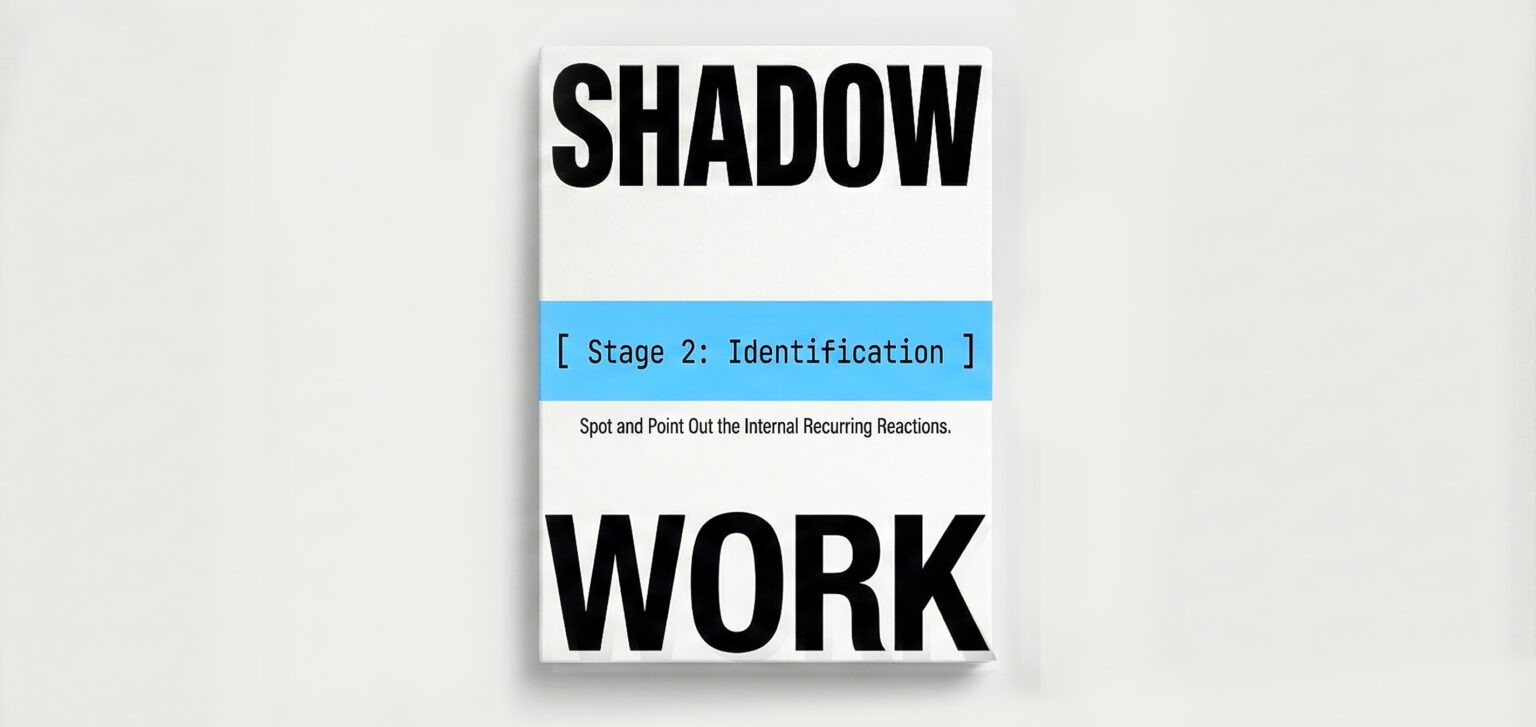
Output: Meaning. You know where the reaction is coming from.
This is where you tell the version of you that got hurt decades ago: “You can stop driving the car now.”
Stage 3: Integration (The Choice Point)
Now that the reaction makes sense, you’re no longer hijacked by it.
You have a choice.
- Can you stay calm while someone questions your timing?
- Can you widen the gap between trigger and reaction?
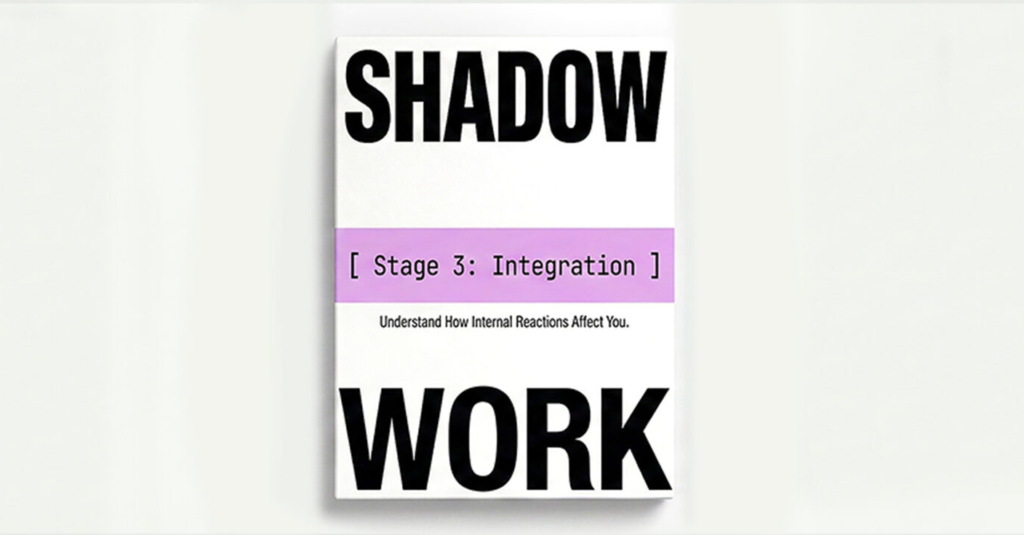
Output: Choice replaces compulsion.
You have newfound power over a reaction when you know it exists and where its trigger lies.
You will no longer act compulsively.
Stage 4: Alignment (The Master Journal)
How do you live and move forward long-term?
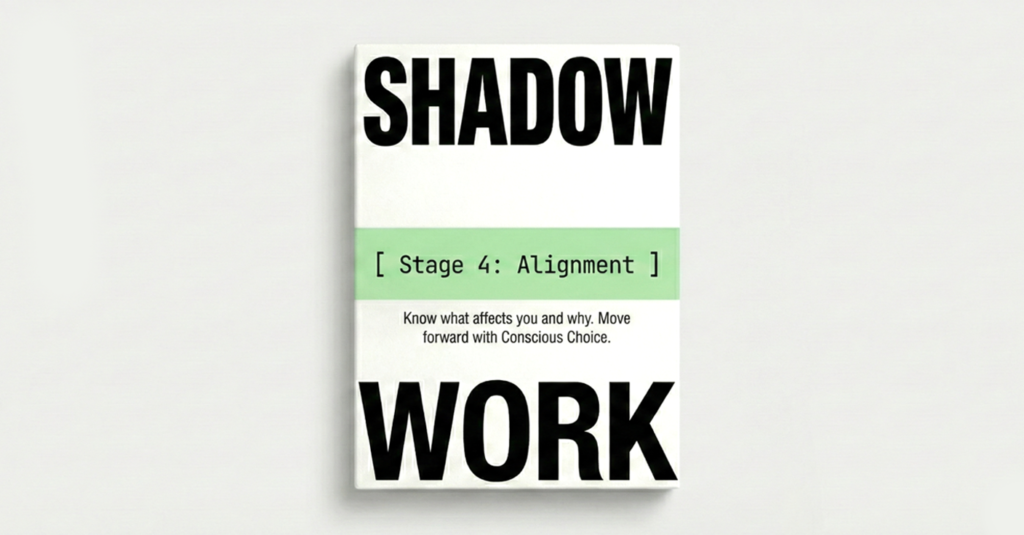
With the knowledge gained in the first three stages, you decide and control how you interact with situations, events, your workplace, and your personal relationships.
Output: Self-trust and confidence.
Why “Near Me” Doesn’t Matter
You searched “shadow work therapy near me” because you’re conditioned to think important work requires appointments and offices.
Shadow work is different.
What actually matters:
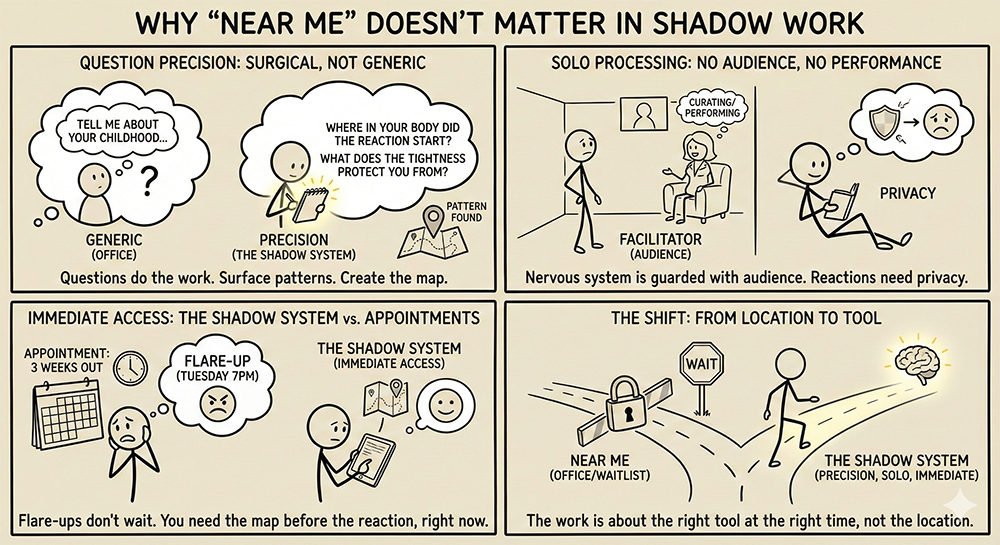
Question Precision
Not “tell me about your childhood.”
Questions like:
- “When you snapped at your partner, where in your body did the reaction start?”
- “What does that tightness protect you from feeling?”
These questions do the work. They surface patterns. They create the map.
Solo Processing
Your nervous system is guarded when there’s an audience.
Even with the best facilitator, part of you is performing. Curating.
The reactions you need to see won’t surface in front of someone else.
They need privacy. They need you alone, with questions designed to bypass your defenses.
Immediate Access
The next flare-up doesn’t wait for your appointment.
It happens Tuesday at 7pm when your partner makes a comment. Thursday morning when a coworker sends an email.
You need the map before the next reaction, not three weeks from now.
The Privacy Premium
Shadow work uncovers things you don’t want in a file.
The reactions you’re ashamed of. The patterns you’ve hidden from yourself. The triggers that make you look small or petty or irrational.
These don’t belong in medical records. They don’t belong in anyone else’s notes.
A structured system runs entirely in your browser. Nothing stored on servers. No login required. No behavioral profiling. No paper trail.
You see your patterns. You get your Awareness Record. You keep it.
Nobody else ever needs to know what you uncovered.
Shadow work requires admitting things to yourself that you won’t admit out loud. The framework that allows that level of honesty isn’t in an office. It’s in complete privacy.
Who This Isn’t For
This system isn’t crisis intervention. It’s not diagnostic. It’s not a replacement for medical care.
This system is for people who:
- Function fine on the surface
- But keep running the same reaction patterns
- And are tired of managing symptoms
- And want the blueprint to their nervous system’s wiring
It’s for the person who snaps at their partner over dishes and knows that logically, it’s not about the dishes.
It’s for the professional who gets defensive when asked simple questions and recognizes the pattern but can’t stop it.
It’s for people who are ready to see what’s actually running the script.
Not manage it. Not cope with it.
See it. Understand it. Choose differently.
The One-and-Done Model
Monthly subscriptions. Ongoing sessions. Nurture sequences. None of that here
This system operates differently: You run it. You get results. You’re done.
No subscriptions. No newsletters. No follow-ups.
Once you have your blueprint, the job is complete.
Why?
Because shadow work isn’t a lifestyle. It’s a map.
You don’t need ongoing access to questions you’ve already answered.
You need the visibility. Then you need to live your life.
What You’re Actually Searching For
You didn’t search “shadow work near me” because you wanted geography.
You searched it because you’re exhausted.
Exhausted from reacting before you think. From sending texts you regret. From snapping at people you love. From feeling hijacked by your own nervous system.
You’re searching for the off switch.
The way to intercept the reaction before it dictates your choices.
That’s not near you. It’s inside you.
And the fastest path to it isn’t an office building. It’s a structured framework that maps your triggers in 60 minutes, shows you the origin in another hour, and gives you choice in the hours after that.
No appointments. No waitlist. No intake forms.
Just the blueprint. Tonight, if you want it.
The Lightning Detector, The Mute Button, The Choice Point, The Master Journal
Four stages. One transformation.
Stage 1: Map the triggers. See the lightning before it strikes.
Stage 2: Understand the why. Spot the Old Story driving reactions.
Stage 3: Widen the gap. Practice control. Choose your response.
Stage 4: Live the alignment. Move forward with confidence.
You can run Stage 1 alone and solve more than most advice ever will.
Or you can run all four and leave with complete control over reactions that have been running your life.
The choice is yours.
But the search for “shadow work therapy near me” ends here.
Because the best option was never local.
It was immediate. Private. Precise.
And it’s available right now.
Ready?
60 minutes. Full map. Immediate insight.
No human judgment. No paper trail. No subscriptions.
Just you, the right questions, and the blueprint to your nervous system.
Or start with the complete system. All four stages. Total visibility. Permanent tools.
Get The Complete Blueprint System
The flare-up is coming. The snap. The reaction you’ll regret.
You can manage it. Or you can map it.
One takes years. The other takes 60 minutes.
Your choice.
FAQ: What You’re Probably Wondering
Will this actually work for me?
One way to find out: 60 minutes. Full map. Immediate insight of the internal triggers.
What if I see something I don’t like?
Even better. Now you can remove it, and fast.
What if nothing changes?
Unlikely. Once the trigger is identified, the next move is determined.
What if I am the problem?
Problems have solutions. You’re right on time.
Do I need experience with shadow work?
No. The system is structured and guided. You don’t need prior knowledge.
How private is this?
Completely. Your responses are processed in-session, in real time, and not stored once your session ends. You’ll receive your Awareness Record and keep it. Your session runs entirely in your browser. Nothing stored on servers.
How much time does it take?
Stage 1 is approximately 60 minutes. You move at your own pace.
Is this emotionally intense?
No. The system focuses on observation—surfacing internal triggers to the surface for you to observe and eventually decide.
Do I have to complete all stages?
The complete set achieves the desired result. If you choose one stage at a time, they must be taken in order. Stage 1 provides clarity; later stages build from there when you’re ready.
What happens after Stage 1?
You can continue into later stages when you choose. Stage 2 focuses on meaning, Stage 3 on choice, and Stage 4 on long-term alignment.
What if I feel strong emotions during the session?
You’re in complete control. No pressure to analyze, solve, or act on anything. If you need to pause, you can stop at any time. Your Awareness Record captures only what you notice, without judgment or interpretation.